Pattern
-
Herringbone
-
Chevron
-
Versailles
-
Wide plank
The complete guide to wood flooring patterns — herringbone, chevron, Versailles, basketweave and wide plank. What separates each pattern, when it reads best, and the stability and installation implications that turn a beautiful design into a floor that stays tight.
Written for architects, interior designers and developers briefing a feature floor. Trivaro produces bespoke parquet to project drawings through our Italian workshops — any pattern, species, block size and finish.
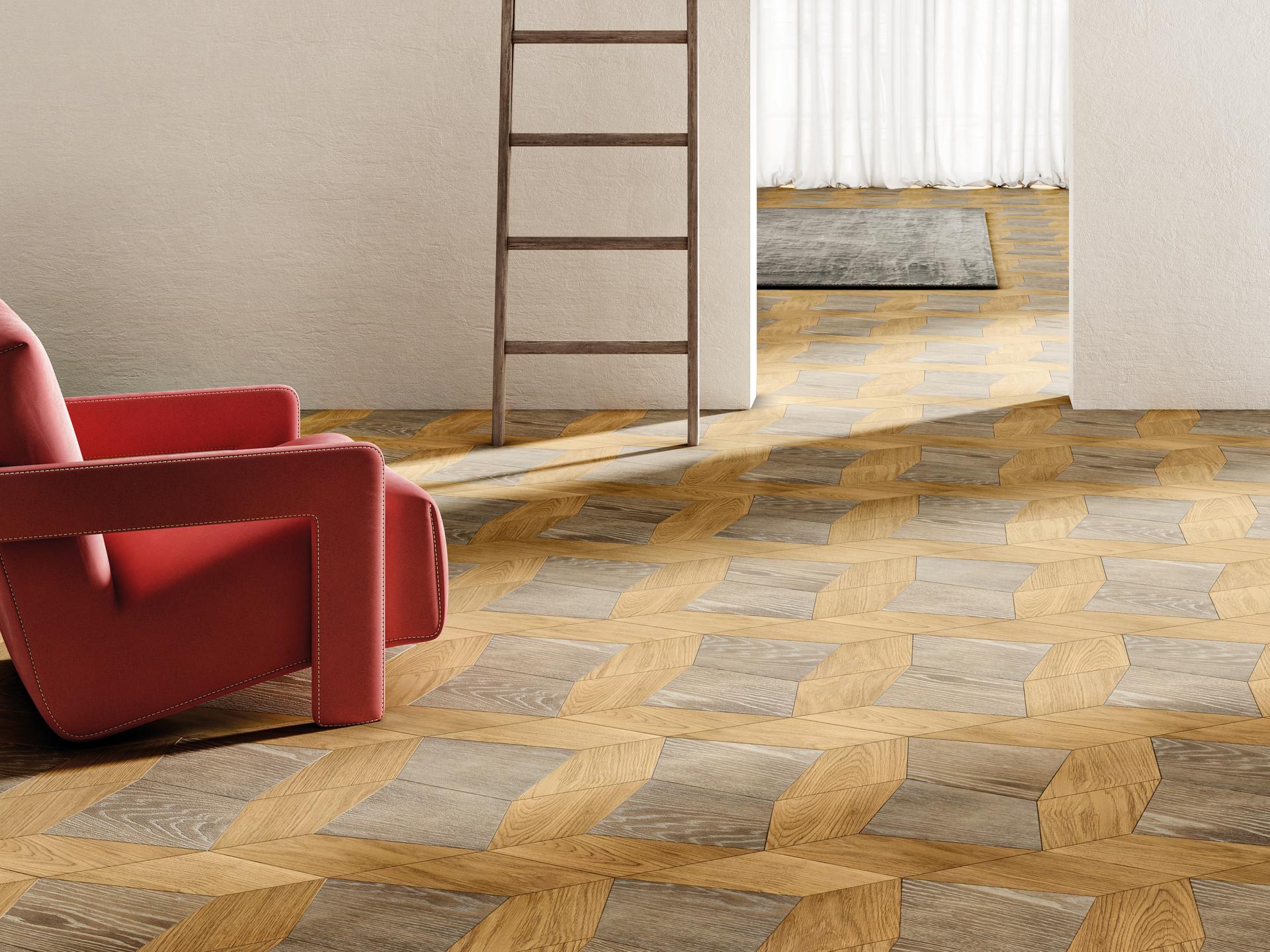
This is the comparison everyone asks about. Both are made of blocks; the cut and the join are what set them apart — and that drives cost, feel and where each works best.
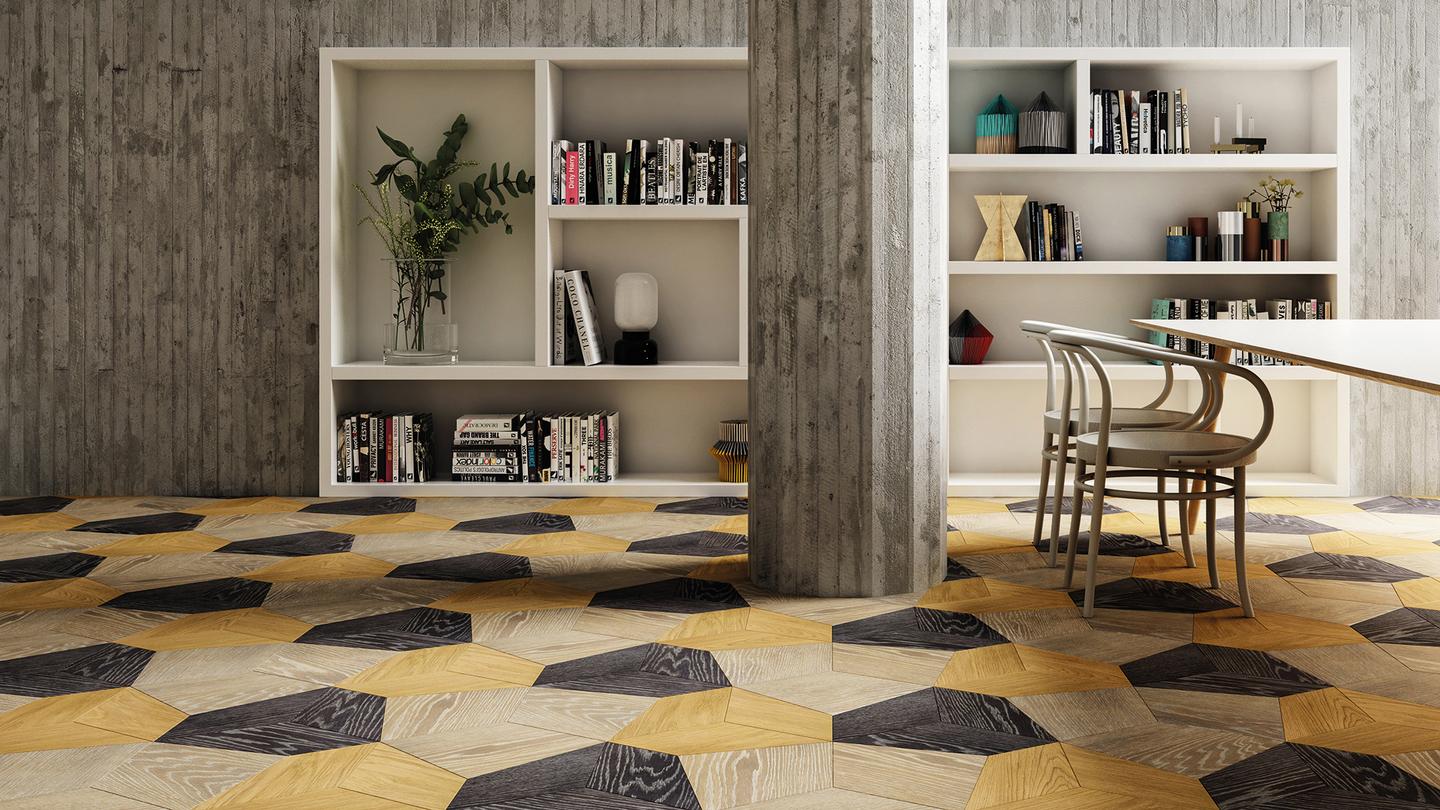
Beyond herringbone and chevron, a feature floor can use any of these patterns — all available bespoke in engineered construction for commercial stability.
The classic 90° broken zig-zag. The default parquet read; works at almost any scale.
Two or three blocks grouped before the turn — a bolder, larger-scale take for big spaces.
Angle-cut continuous V. Formal and directional; emphasises the length of a room or corridor.
Square decorative panels of interwoven blocks — heritage luxury, hotels and grand residential.
Blocks woven in alternating pairs for a textured, traditional surface in feature zones.
Long generous boards for a calm, continuous canvas in lobbies, lounges and offices.
A quick map from pattern to use case. The pattern is a design decision — but engineered construction with a 3–6 mm wear layer is what makes any of them perform commercially.
Herringbone
Chevron
Versailles
Wide plank
Classic, warm, textured
Formal, contemporary, directional
Heritage, luxury, decorative
Calm, continuous, understated
Hospitality, retail, residential
Flagship retail, feature corridors
Luxury residential, hotels
Lobbies, lounges, open offices
€€ — moderate
€€€ — highest (angle cuts)
€€€ — bespoke panels
€ — lowest pattern complexity
A great parquet floor starts with a clear brief. Four steps that get the pattern, scale and performance right before production starts.
Decide the emotional read first — classic herringbone, contemporary chevron, heritage Versailles or calm wide plank — and where it sits in the space. Directional patterns (chevron) can lengthen a corridor; herringbone fills a room evenly.
Block size changes everything. Larger blocks read calmer and more contemporary in big spaces; smaller blocks read busier and more traditional. Match the block scale to the room — we advise on dimensions, ratios and bevels for the effect you want.
Oak, walnut or ash; Select to Rustic grade; brushed, smoked, reactive or custom-colour finishes. The surface treatment carries as much of the design as the pattern itself.
Specify engineered construction with a 3–6 mm wear layer for stability across the many seams of a patterned floor — essential over underfloor heating. Glue-down installation gives the tightest, most durable result.
Continue with the bespoke production page and the commercial specification guide to take a feature floor from concept to delivery.
Custom Wood Flooring — bespoke parquet and engineered wood to your drawings, from Italian workshops.
Specifying Commercial Wood Flooring — fire class, wear layer, sourcing and documentation.
Engineered Wood — the stable construction behind every patterned floor.
Common questions about herringbone, chevron and parquet patterns. For bespoke production see Custom Wood.
Herringbone uses rectangular blocks at 90°, end-to-side, for a broken zig-zag. Chevron uses angle-cut blocks (45°/60°) meeting point-to-point in a continuous V. Herringbone reads traditional and textured; chevron reads formal, contemporary and directional. Chevron costs more — angle cuts, critical alignment and higher waste.
Parquet is the umbrella term for wood flooring made of blocks in a geometric pattern. Herringbone and chevron are two of those patterns — the most common — alongside Versailles, basketweave and custom layouts. All herringbone and chevron floors are parquet, but parquet is broader. “Parquet” without qualification usually means herringbone.
Engineered is strongly preferred. Patterns concentrate many short blocks with multiple seams, so seasonal movement is multiplied. The stability of an engineered multi-layer core keeps the pattern tight and is essential over underfloor heating. Solid parquet exists for heritage work but gaps and cups more in modern heated interiors. See Engineered Wood.
Wide planks suit large open areas; herringbone/chevron suit feature zones, reception, hospitality and flagship retail where the floor signals premium quality and aids wayfinding; Versailles suits heritage and luxury residential. The pattern is the design decision — engineered construction with a 3–6 mm wear layer makes it perform commercially.
Both cost more than straight planks — far more blocks, seams and setting-out. Chevron is typically the most expensive: every block is angle-cut, alignment is critical and offcut waste is higher. Herringbone is more forgiving. Budget extra material allowance (often 5–10%) and skilled installation for either.
Common engineered block widths run 60–150 mm, lengths 300–750 mm, at length-to-width ratios around 4:1 or 5:1. Larger blocks read calmer and contemporary in big spaces; smaller blocks read busier and traditional. For bespoke projects, block size, ratio and bevel are all specified to the room scale.
Yes. Our Italian partners produce made-to-order parquet in any pattern — herringbone, double/triple herringbone, chevron, Versailles, basketweave and custom — with bespoke block sizes, species, finishes and bevels. The route for flagship retail, luxury hospitality and design-led residential. See Custom Wood.
Yes, in engineered construction installed to protocol. Patterned floors have many seams, so stability matters even more over UFH — exactly what the engineered core provides. Keep surface temperature within the manufacturer limit, commission heating gradually, and glue-down for the best contact and stability.
Trivaro produces bespoke parquet to project drawings through our Italian workshops — any pattern, species, block size and finish, in engineered construction for commercial stability.
Send us your concept, references or drawings and the approximate area. We will respond with pattern options, samples and a B2B quotation.