Parameter
-
Fire performance
-
Hygiene
-
Chemical resistance
-
Thickness
-
Impact
-
Wetrooms
-
VOC / IAQ
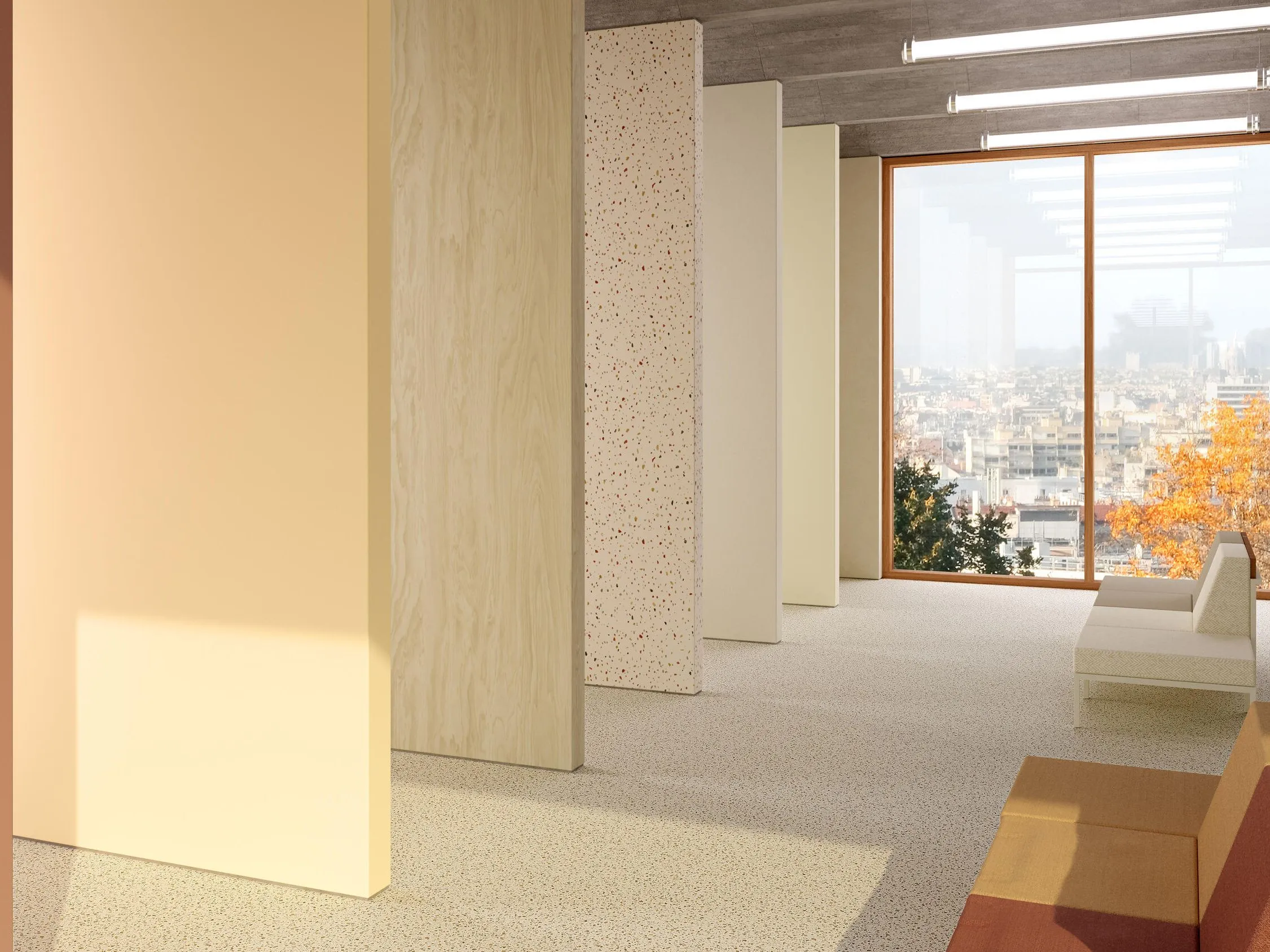
Vinyl wallcoverings and impact‑resistant panels create wash‑down, hygienic and durable wall surfaces with sealed joints. They are ideal for healthcare corridors and bathrooms, education, food‑service back‑of‑house, laboratories, wetrooms and public amenities.
We supply materials only to B2B customers (distributors, contractors, developers, architects, FM). Installation is by your appointed wall cladding contractor per system manuals and local code.
Hygienic envelope: sealed joints and coved junctions reduce dirt traps vs paint/tiles.
Impact resistance: tough surfaces withstand carts, trolleys and daily cleaning.
Water & stain resistance: suited to wetrooms, bathrooms and food prep areas.
Low VOC: supports healthy interiors; documentation available for submittals.
Aesthetics & compliance: matte, low‑glare finishes with colour/contrast options for wayfinding and accessibility.
Homogeneous vinyl wall sheets — thermoformable with hot‑air welded or chemically sealed joints.
Rigid PVC/Composite panels — impact‑resistant panels with sealed trims.
Corner guards & protection profiles — external/internal corners, crash rails and bumper rails.
Integration with floors — connects to coved skirtings on vinyl/linoleum/safety floors for a continuous envelope.
Confirm exact values and installation details for your jurisdiction and selected line.
Fire performance
Hygiene
Chemical resistance
Thickness
Impact
Wetrooms
VOC / IAQ
B‑s2,d0 (typical for walls; verify DoP/test per SKU)
Sealed joints (welded/chemically sealed); smooth, non‑porous
Compatible with disinfectants/cleaners (see datasheet)
1.5–2.5 mm sheet; thicker for rigid/impact panels
Options with enhanced impact layers and protection rails
Compatible with wetroom floors; use preformed corners and trims
Low VOC; EPD/LCA on request
Quick Comparison
Joints/hygiene
Impact resistance
Wetroom use
Cleaning
Installation speed
Best use
Sealed joints; no grout
High (with panels/guards)
Yes with sealed joints
Fast wipe‑down
Fast
Healthcare, education, kitchens, wetrooms
Grout lines (maintenance)
High tile hardness; brittle at edges
Yes (grout maintenance)
Intensive grout care
Slower (tiling)
Bathrooms, kitchens, feature walls
Joints/cracks over time
Low–Medium
No
Frequent repaint
Fast initially
Dry admin areas
Corners & joints: specify preformed internal/external corners and sealed trims; avoid exposed edges.
Coving & skirtings: continue coved skirtings from floors to walls for wash‑down zones.
Penetrations: seal around handrails, rails, fixtures with compatible sealants/flanges.
Colour strategy: select LRV‑contrasting colours for wayfinding and accessibility.
Protection rails: add crash/buffer rails where trolleys circulate (healthcare/education corridors).
Pair with wetroom vinyl floors using welded seams and drain kits for complete waterproofing in showers and changing areas.
Use preformed corners and upstands behind sanitaryware to maintain continuity.
Materials‑only supply. Installation by your contractor/installer.
full wall kits (sheets/panels \+ trims \+ corners) or components.
stock vs made‑to‑order colours/sheet thickness.
datasheets, DoP/DoC, fire tests, chemical resistance, EPD/LCA.
sheet chips, texture panels, protection rail samples.
spec wording, detail drawings, maintenance guides.
Here you'll find answers to the most common questions about wallcoverings.
Yes—sealed vinyl wallcoverings can be used in showers when paired with wetroom vinyl floors and compatible drains/corners.
Specify lines with chemical‑resistance data; follow the cleaning guide to maintain warranty.
By hot‑air welding or chemical welding using manufacturer‑approved rods/products and trims.
No—materials only. Installation is by your appointed contractor.